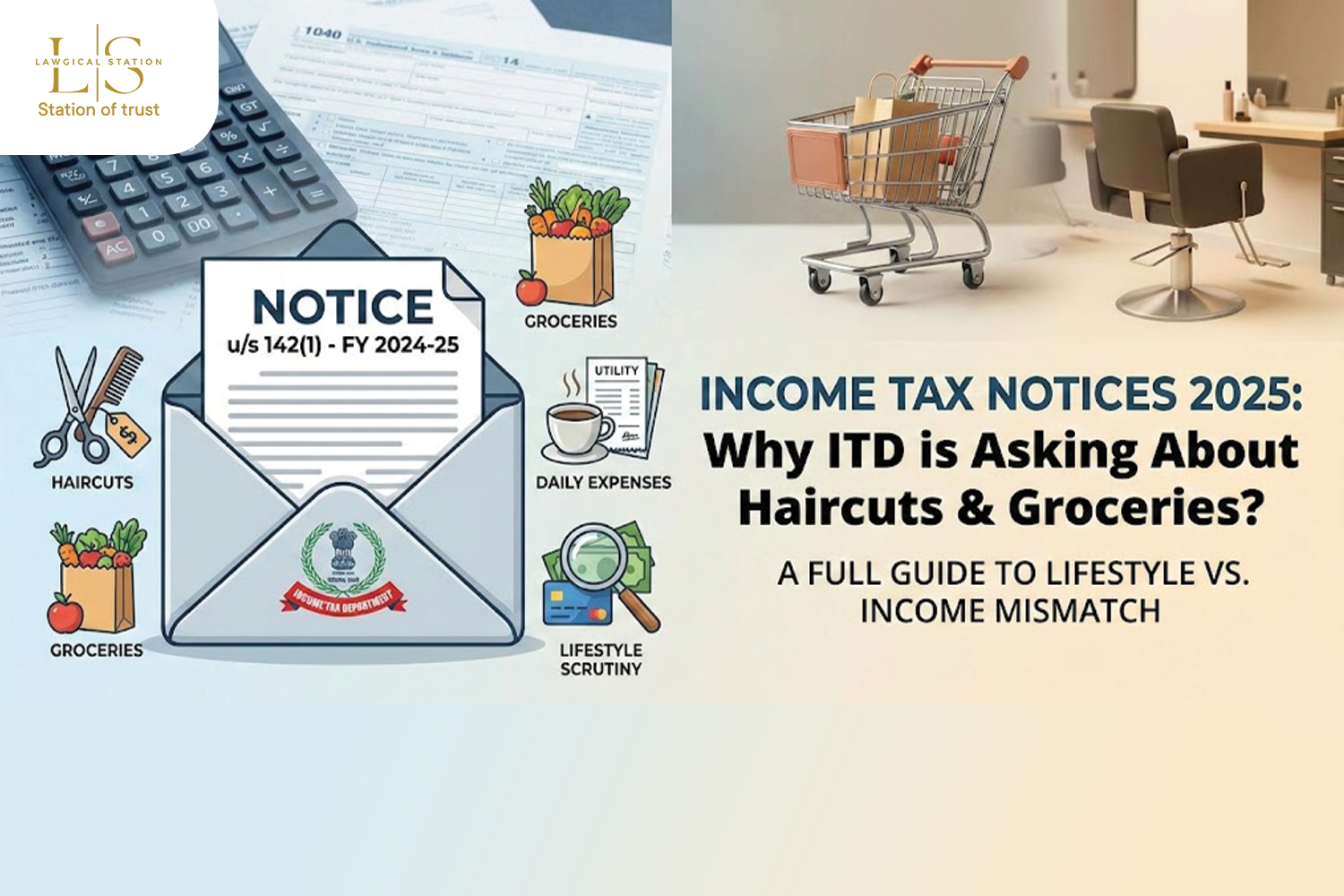
In early 2025, a unique Income Tax notice went viral after the taxpayer was asked to justify extremely personal expenses — including monthly haircut costs, perfume purchases, grocery details like rice and oil, clothing, electricity bills, restaurant visits, gifting expenses, and even day-to-day household items. Millions of people started asking: Can Income Tax really ask this? Why are such small expenses being questioned? Does this mean everyone will receive such notices? This blog explains exactly why such notices are issued, the legal basis behind them, and what you should do to avoid potential tax penalties in 2025.
What Exactly Did the Income Tax Notice Ask For?
The viral scrutiny notice demanded a detailed monthly breakdown of: Rice, oil & grocery costs; Gas & electricity; Clothing & footwear; Haircuts & grooming; Cosmetics and perfumes; Restaurant & food delivery spending; Gift expenses to relatives; Car running and insurance; Life & building insurance; Students' fees and books; Social events & gatherings; Daily household expenses. While such depth of inquiry feels intrusive, it is rooted in Section 142 of the Income Tax Act.
Can the Income Tax Department Ask for Personal Expenses?
Yes — legally they can. Under Section 142(1), the Income Tax Department has the authority to request: Income details; Expense details; Supporting bills, receipts, or digital proofs; Bank statements; Clarification of spending habits. This is part of a formal scrutiny assessment to ensure that the taxpayer's declared income matches their lifestyle and spending patterns.
Why Income Tax Is Asking About Haircuts, Perfumes & Groceries (Real Reason)
The department compares two key numbers: Your declared income and Your lifestyle expenses observed through bank statements, UPI payments, and digital records. If these two don't match, the system triggers a red flag.
Typical Mismatch Examples
A person earns ₹12 lakh annually but shows almost no personal expenses in bank records. High-value purchases but no corresponding cash withdrawals. Business owners putting personal expenses into business accounts. Irregular or extremely low household spending that seems unrealistic. This suggests possible unreported or cash income, leading to detailed questioning.
Why These Notices Increased in 2025
Three major shifts in India made such scrutiny more common:
1. Growth of UPI & Digital Payments
UPI makes your spending pattern very visible. Lifestyle trends become easier to analyze by automated systems.
2. AI-Based Income–Lifestyle Matching
New Income Tax analytics tools compare spending vs declared income. A mismatch auto-triggers inquiry.
3. Rise in Cash-Based Businesses Underreporting Income
Departments are tightening compliance for freelancers, traders, and small businesses.
What If You Cannot Justify the Expenses?
This is the part most taxpayers are unaware of: If you fail to justify your expenses, the Income Tax Officer can estimate your annual household expenses — sometimes assuming ₹10 lakh per year. This estimated amount may be added to your taxable income. This leads to: Additional tax; Interest under Sections 234A/B/C; Penalty for underreporting or misreporting. Thus, poor record-keeping can cost lakhs.
Who Is Most Likely to Receive Such Notices?
Based on scrutiny patterns, notices often go to: Freelancers & self-employed professionals; Small business owners; People with very low household withdrawals; Individuals showing personal expenses inside business accounts; Those with irregular or unusually low spending patterns; High-income earners showing almost no expenses. If your spending looks unrealistically low or invisible, the department suspects undisclosed cash.
How to Protect Yourself from Income Tax Notices in 2025
Here are practical, expert-backed steps:
1. Prefer Digital Payments
UPI and card payments automatically create proof.
2. Maintain a Basic Monthly Expense Summary
You don't need a full ledger — just rough categories: groceries, transport, food, utilities, grooming, misc.
3. Keep Digital Receipts
Take photos of bills or save SMS/email confirmations.
4. Separate Personal & Business Accounts
Mixing expenses triggers scrutiny red flags.
5. Keep Lifestyle–Income Ratio Logical
If your income increases or decreases, your spending pattern should align.
6. File Returns Honestly & On Time
Clean compliance = peace of mind.
Should You Be Worried?
Not necessarily. Most such notices are routine scrutiny cases, not mass notices. They are issued only when: Data doesn't add up; Spending appears unrealistic; The system detects anomalies. For genuine taxpayers with transparent records, these queries are easy to respond to.
Conclusion: ITD Isn't Interested in Your Haircut… It's Interested in Hidden Income
The goal of the Income Tax Department is not to audit shampoo bottles or grooming habits. Their goal is to ensure that: Your declared income + your lifestyle = consistent and believable. A mismatch invites scrutiny. Good record keeping avoids issues.